 RSS FEED
Archive for the ‘Musings’ Category
Did you ever want a whole new head?
January 28th, 2017
If you’re like me, that’s something you’ve asked for many times. My loving son Adam made me another head when he was in 9th grade – at the time when my chronic migraines were at their worst, just before I started working with Dr. William Young at the Jefferson Headache Center. Adam came home one day, and said, “I can’t give you a migraine-free head, but I made a migraine head for you. Maybe all your migraines can go into this head instead of yours.” 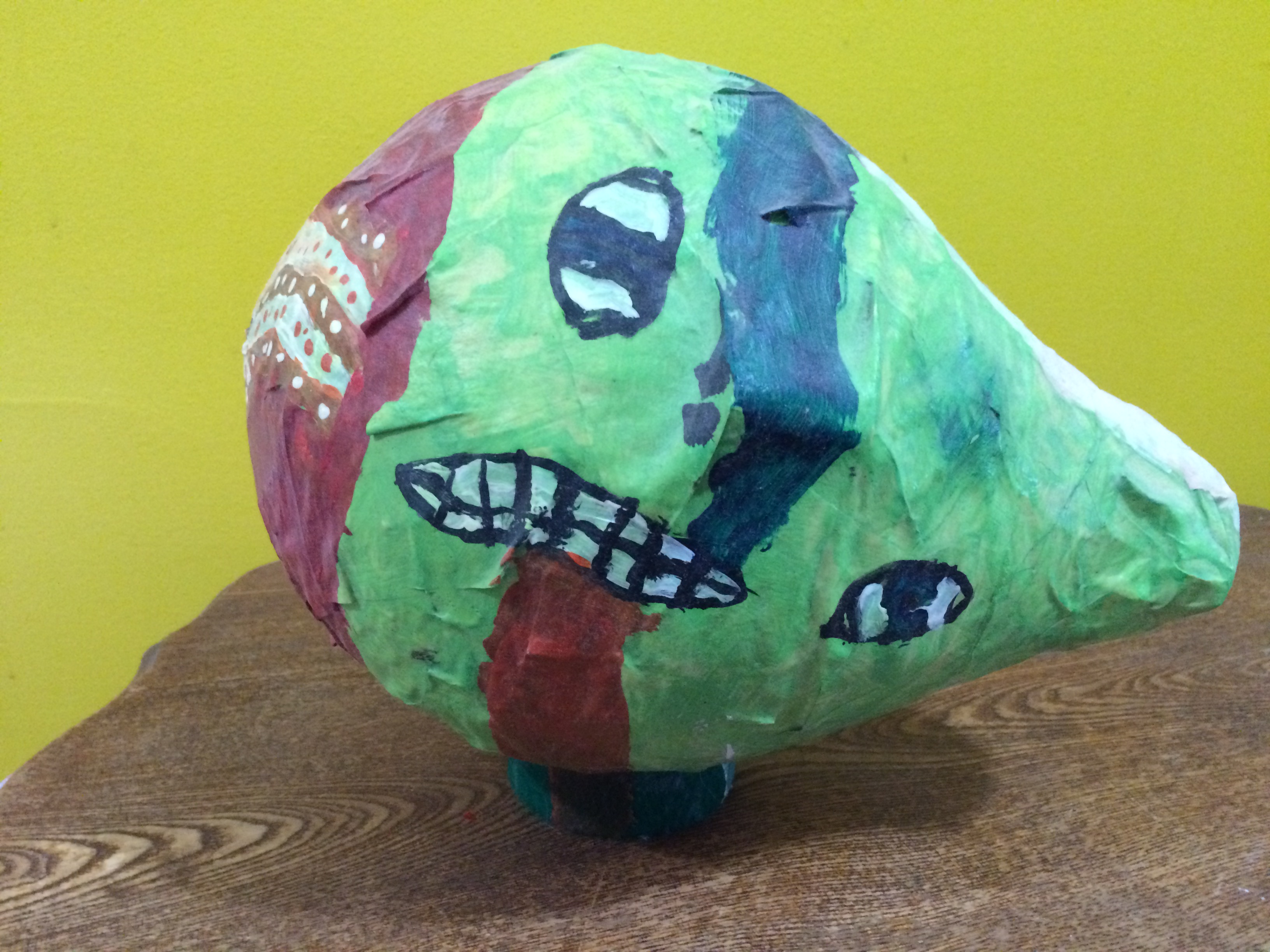
Here it is in all it’s horrifying glory – I think he captured the pain and despair beautifully. 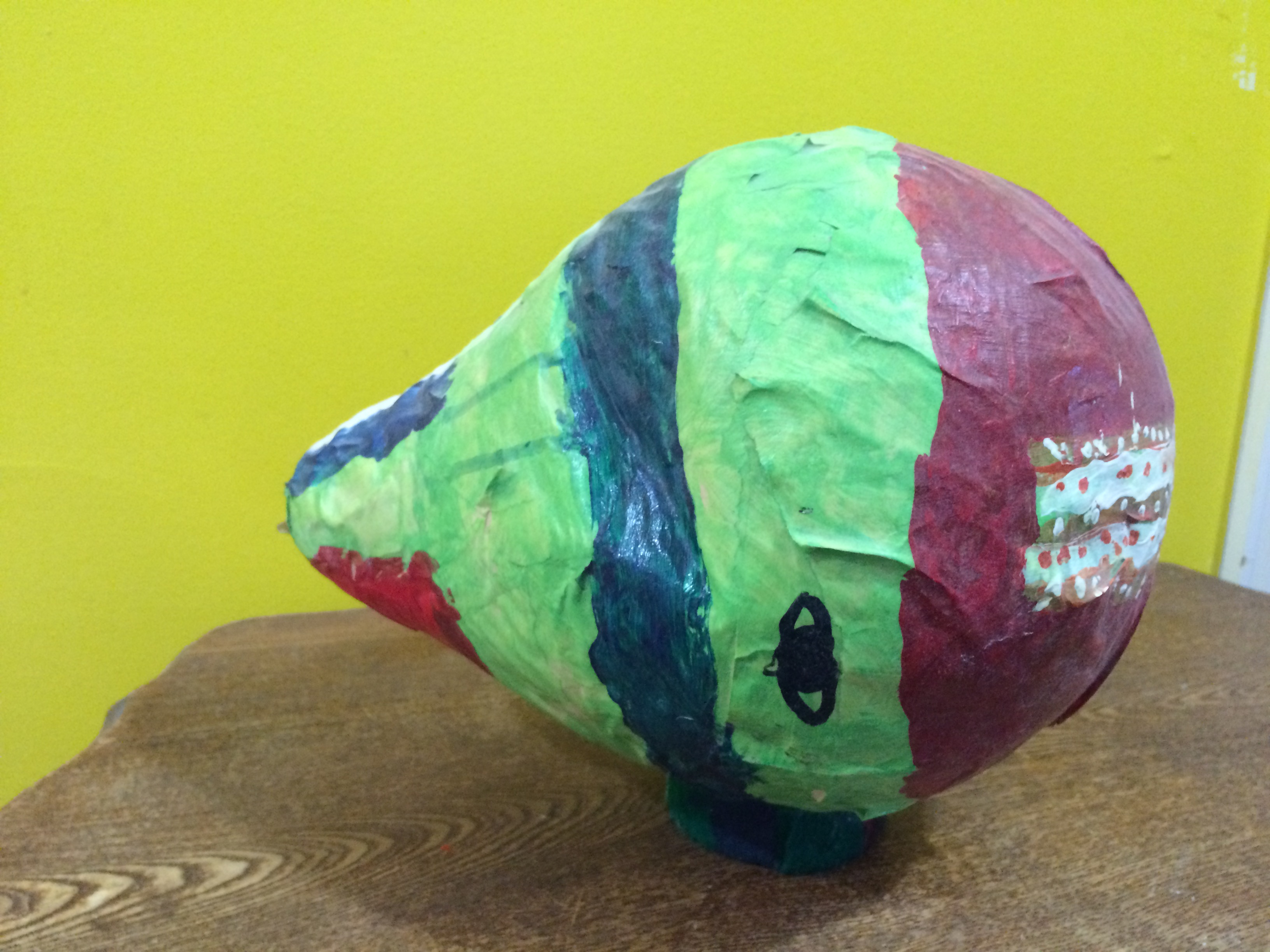
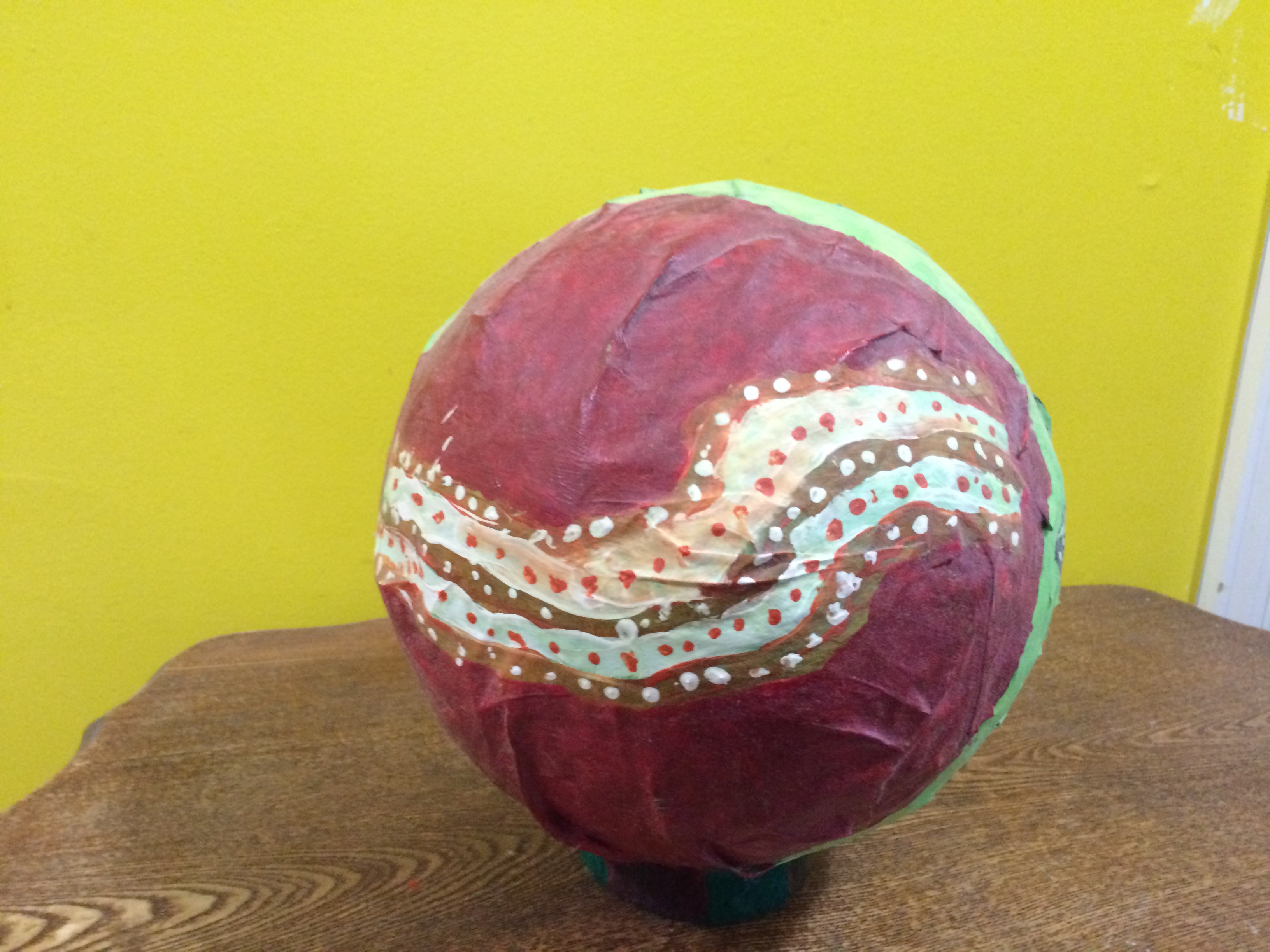
Seven years later, my migraines are no longer chronic. Sure, I had great treatment from one of the best, and learned new techniques to manage my migraines, and menopause came by and blessed me with fewer migraines as well, but maybe the head captured a lot of them on its own. The magic of love. The gift of a truly empathic artist!
Ciao Bene!
– Megan Oltman
Tags: Adam Oltman Porcher, Adam Porcher, Migraine art, Migraine management
Posted in Managing, Musings | Comments (0)
Migraine Awareness Month #1: Your First for the First
June 1st, 2012
 This is an awareness month, right? So it should be quite appropriate that the post for the beginning of the month starts with next to no awareness! It’s hard for me to tell the story of my first Migraine because I wasn’t aware enough to notice it. I have had majorly dramatic Migraines, and many of them, but my experience didn’t start out that way. It was more of a series of maybes, and a gradually building awareness.
Maybe the 1st – #1: From around age 7 to 10 I had recurrent unexplained stomach aches, great hollow, gnawing, aching pain that wasn’t nausea and wasn’t cramps and wasn’t bloating or anything to do with digestion. The pediatrician was baffled. I worried that he thought I was faking. They disappeared without having been diagnosed. It wasn’t until at least 30 years later that I read about abdominal Migraines in children. Aha?
Maybe the 1st – #2: I was 14 and an adult friend had taken me and her son to a play in Manhattan. Riding the train home afterwards I remember laying my head back on the seat with heavy pain and pressure in my forehead, and saying “I think I have a sinus headache”. Again it was decades before I learned that most so-called sinus headaches (in the absence of a sinus infection) are actually Migraines. Aha?
First awareness? – #3: At 17 I had surgery at Montefiore Hospital in the Bronx (Exploratory surgery for more undiagnosed abdominal issues. Completely unnecessary surgery, as it turned out, for my earliest IBS attacks – another story for another time). Driving home, we passed the Montefiore Headache Center. It was 1976. The Headache Center was several decades old already – the first Headache center in the world, I believe. I asked my parents what they did in a headache center, and they said they assumed there were doctors who helped people with extremely severe and frequent headaches. I remember thinking, I will probably need that someday. So even though I don’t clearly remember a Migraine that occurred before that time, at 17, I already knew.
First naming – #4: In my mid-twenties I was in law school and working harder than I ever had before, under a fair degree of stress and sleeping irregularly. I remember one April 15 in the office of the law journal I helped to edit, my friends were trying to finish their tax returns and my head was pounding, I went into the bathroom to vomit, and I remember thinking “this is a Migraine.” I don’t know where I got that knowledge; I must have read something about Migraine. I do remember that the hideous sickness was familiar to me at that time, though I hadn’t always had a name for it. I commuted to school, and a friend gave me his dorm room key and let me go sleep the Migraine off in his room. From that time on they got more frequent and the serious ones, the throwing up in the street, tear my head from my shoulders, scream and cry ones, they started then.
Glad to get this written on the first, anyway. I will have to come back and link it on the second, or I will have a Migraine soon. Not a first, not a worst, and almost certainly not a last (more’s the pity), but one I can probably avoid by getting some sleep.
Be well, my friends.
– Megan Oltman
Tags: abdominal Migraine, migraine, Migraine awareness, Montefiore Headache Center, sinus headache
Posted in Advocacy, Musings | Comments (0)
Love Beats Hate: I get by with a little help from my friends
November 20th, 2010
I’m coming late to the party. It’s 3 days after the official Love Beats Hate event and I haven’t even managed  to read very many of the posts – I’m working on it. But I figure keeping the love alive is not a bad thing to do. And I want to be part of the party.
What can I say? Perhaps nothing that hasn’t been said before. I love you bloggers and online health activists and I am honored to be among you. I was a busy person living my life when illness tackled me and brought me down. Life threatening allergies. Chronic Migraines. Crippling fatigue, which resulted many years later in a diagnosis of Fibromyalgia. Irritable bowel syndrome, with weeks of enervating stomach pain. On the hate side, I can truly say that I hate being sick.
I can feel very very sorry for myself. Even making this list brings a tear to my eye. But it’s not just the illnesses. It’s the years I spent fighting, not accepting, pushing myself way beyond my limits, thinking of myself as lazy and undisciplined, longing for the day when it would be all better. I neglected the people I love with my head in the clouds trying to build a different reality than the one I live in, trying to force the outcomes into a shape I wanted. I never paid enough attention to where I was, to my home, my children, my work. I thought that if I kept pushing, somehow I could make it all better. I regret those years. I listened to those who think that illness is a result of wrong thinking, that we can transform our way out of illness. I will not say that there is an evil intention in this type of thinking, but it led in my life to evil results. I felt guilty for my illnesses. I hated my illnesses, and myself for having them. I tried to ignore them and push past them. Until I was too sick to do it any more. And I finally found some doctors and therapists who could help. I recommitted myself to meditation and conscious relaxation, acceptance and love, and learned little by little to accept the highly sensitive, aching weary frame that I live in.
Three years ago I started participating in the online Migraine community, and then the larger chronic illness community. I had something to share, to offer, with the relaxation techniques I had learned, and the coaching skills I used professionally. I decided to create this thing called Migraine management coaching, and to go talk to others with my illness. I won’t say I haven’t had a contribution – I think and hope that I have. But what looked at first like a side benefit – the outstanding relationships I was forming with others who understood my life – turned quickly into the main event.
The darkest days of chronic Migraine, among the sickest times in my life, were lightened by the time I spent on My Migraine Connection, and blogging, and reading and commenting on others’ blogs. I became a part of a community, a loving, supportive, funny, vibrant community. I got such deep and caring help with some of my hardest struggles.
Then I discovered Facebook and a surprising thing happened – my chronic illness community and my other communities – family, friends, colleagues from the many parts of my life, all began to come together. When I post about pain or illness, many will comment who understand and are with me in the experiences, but the others in my life will also express sympathy, distress, let me know they are with me too, though they may not have my same issues. It has been enormously healing. I want to say I am sorry to all those I love, and who love me, who I neglected, or pushed away, or tried to force into seeing things in a particular way. I was running away from myself. It wasn’t until illness brought me to a standstill, until there were no more reserves of energy to keep pushing, that I became able to accept, and out of accepting, express, and explain, and have you get what my world is like.
After three years of working at it my Migraine disease has moved from chronic to episodic and I have long stretches of freedom from pain in the brain. I am back working full time, or close to it, at law and mediation. I wish that I could just help chronically ill people full time, but I had to get back to earning a living. I am exhausted by my work and can’t seem to think much at the end of a long day. My fibromyalgia and irritable bowel are activated much more often than they used to be by the stress and exertion of my life. So I don’t spend nearly as much time on this blog, or on forums or other blogs, as I used to. I miss it. I wish I could do more. But I do check in with my friends, on their blogs, on Facebook, on Twitter, and I am present every day to how I get by with a little help from my friends. I am lifted up and cradled by you. I love you.
– Megan
Tags: allergies, blogging, chronic illness community, fibromyalgia, friendship, irritable bowel syndrome, love beats hate, Migraine disease
Posted in Communicating, Musings, Weblogs | Comments (2)
Walking with Fibromyalgia
October 20th, 2010
I am counting on some of you old hands at living with fibro to chime in on this one, okay? I believe I have  had fibromyalgia for at least 15 years, and maybe for 35 years. I’ve only been diagnosed for a little over a year, though. My fibro seems to have grown a lot worse in that year as well. What I can’t tell is whether the fibro just seems worse because my Migraine disease has gotten so much better that I can actually notice the fibro now.
I think it is worse, though. Certainly the fatigue is nothing new, that’s a fifteen year old problem, which I thought was ME/CFS. It was raising the question of dealing with Chronic Fatigue Syndrome (CFS) with my headache specialist last year which led him to press my fibromyalgia tender points, and led us both to realize that it was fibro that was the issue. since then things I’ve been experiencing for a while have “clicked,” like how a slap on the shoulder or the teasing pokes my son gives me can really hurt, for a long time. Things that used to be just mildly uncomfortable or unpleasant cause actual pain now. What is new is the feeling that my aching arms weigh a ton and are likely to fall off. This is after a day of sitting up at a desk typing.
I’m finding this disease a hard one to learn to manage. I try to keep my activity level fairly steady from day to day, but if I do get a flare I need to rest for it to go away. Then I’m back to a very inactive state and have to slowly build up all over again. I always want to do many things when I do have the energy for them, but I can cross the line to overdoing so easily.
Saturday, for example. A couple of our dearest friends were in NJ/NY for the weekend – in from Minnesota. It gave us the impetus to do a deep cleaning of the downstairs – one it had needed for a long time. But the day s tarted at 6:30, because Adam took the PSAT today, and then we cleaned for several hours until they arrived. We had lunch and lots of talk, a too short wonderful visit of a few hours. I did take a nap after they left, but as the sun was starting to go down I was seized with the desire to be outdoors in the bright chilly Autumn day, and walk in the park. (What’s the good of living in the best spot in our little town if I don’t get out and enjoy it?) So I took a good 20 minute walk through the paths in the fields. Then I sat on the bed, propped up on pillows, blogging. There was still laundry to be done but I had expended about as much muscular effort as I should for one day (if not more). I ached a bit, but who knows how much more would have set up a flare? It’s very challenging.
Tags: Adam Oltman Porcher, Adam Porcher, exercise, fibromyalgia, fibromyalgia tender points, ME/CFS, Migraine disease
Posted in Managing, Musings | Comments (0)
Becoming Trigger-Resistant
October 18th, 2010
 I am very fortunate to have my Migraine days down to 3-5 a month now, and most of the Migraines are relatively mild and abort quickly. One thing I notice is that individual Migraine triggers are not so much of an issue, but a whole stack of them will still prompt a Migraine. For instance I can get by for a couple of days with not quite enough sleep, smell some perfume (or more often the bane of my existence, the heavy sweet Axe many of my son’s friends like to wear – Uggh!), be around some smoke, be in a crowded room, and I may get some little twinges that tell me to back down and do some breathing exercises, but they don’t develop into a Migraine. Then say all those things are present and a meal is delayed and my blood sugar gets low, and whammo!
I’m up to 30 hours a week of work at the law firm now, so there’s less flexibility for missing time. My boss is very understanding and lets me build my schedule the way I want, as long as it doesn’t interfere with the flow of work. But if I miss a day or half a day because of a Migraine, I can only make up the time by working longer hours another day, and a day longer than 7 hours (6 working and 1 for lunch) takes a lot out of me. Not that a long day will necessarily trigger a Migraine, but sometimes it does if it’s a rushed or stressful one. Usually the effects are less direct – a long day sitting up at my desk typing will trigger a fibromyalgia flare, and if I don’t manage some rest time to help the flare pass, it’s common to get a Migraine on the tail of the fibro flare.
I know I’ve been talking to you all for quite a while about relaxation exercises and breathing, and I use them nearly every day. They have certainly helped my transition back to near-full-time work. As valuable as they are though, I wouldn’t be where I am now without a good combination of Migraine preventives. Nortriptyline not only reduced my Migraines it greatly reduced my anxiety level and helped me sleep like a log most nights. Then lisinopril lowered my blood pressure and continued the job of reducing the Migraines.
I feel like I’m coming back to life! We have been out socializing nearly every weekend, and I’ve been getting walks in nearly every day again. Right now fibro is more of a problem than the Migraines. I’m finding it tricky to learn how to manage.
– Megan Oltman
Tags: fibromyalgia, migraine, Migraine preventives, Migraine triggers, relaxation techniques
Posted in Communicating, Managing, Musings | Comments (1)
Who You Calling Disabled?
June 5th, 2010
I hesitate to call myself disabled. I work 25 hours+ a week at a demanding job, I do get out and see people,  sometimes, and I’m down to only 3 or 4 days a month in bed. Most days I can wash the dishes and straighten up a bit, more than half my days I get some exercise, many days I can manage the laundry. I’m down to 5 to 7 Migraine days a month, from 12 to 20 a few years ago. Although I have some fibromyalgia pain many days, days like today when I feel wrung out and ache from head to toe don’t come more than 2 or 3 times a month. So who’s calling me disabled?
I push forward through my life with a great deal of determination and most of the time I confidently expect  to get better and better. I have learned so much about how to take care of myself, how to manage my various conditions, and I’ve really improved so much. Days like today, where all I can manage is some reading, some hanging out on line, some tv, when I travel from the bed to the armchair to the bathroom to the kitchen, and that’s a major undertaking, days like today can fill me with despair. I may never get any better than this. I have to accept that possibility – not that I won’t keep on getting up and being positive (mostly) and working striving and pushing (and breaking down when I push too far). But maybe this is as good as it gets.
I am researching Migraines and Social Security Disability for an article I’m planning to write. I encountered the blog of a disability law firm who have helped a number of Migraineurs to get their disability recognized, and compensated. Here’s what struck me. In writing up a Migraine Disability case study, Lawyer Jonathan Ginsberg recounted that the vocational witness called in his client’s case testified that although she felt the claimant could do light duty, low stress work, that no jobs existed that would allow her to be absent 4 to 7 days a month. It’s hard to do this kind of research and really stay detached, and reading that I thought, wow, I could easily need to be absent 4 days a month! The fact that I work less than full time, and for a flexible and understanding boss, makes it possible for me to switch hours around and avoid some of those sick days. But I would be disabled under the same criteria that got the woman in that case granted disability benefits!
Then there’s the MIDAS scale. MIDAS is the American Headache Society’s Migraine Disability Assessment Test. A year ago my MIDAS score was 57 – Which is “Grade IV Severe Disability.” I have been retaking the assessment every few months, and I am down to a 30. Great progress! Guess what a 30 is? “Grade IV Severe Disability.”
I am not knocking my progress, really I’m not. I recently had a reader write in and ask me how to take back her life from Migraine. That’s certainly a phrase I’ve used a lot. Having 5 to 7 Migraine days a month is incredibly much better than having 12 to 20. Being proactive, recognizing our sensitive nervous systems and caring for them, looking at the areas we can impact and working on them, all of these things do make a difference. I am doing better all the time, building up my stamina (though slowly), and managing these days to earn somewhat of a living, which is nothing to sneeze at. But I felt I needed to tell this woman, you can take your life back in the sense of being in charge of your life, but that doesn’t mean you can make the disease go away.
There come those days, like today, when I slam into the brick wall of my own limitations. I worked a long, hard, stressful week this week and today I woke up feeling like I had been pushed through a strainer. Do any of you recognize that one? I’ve felt it on and off for many years, at least ten, and now I recognize it as a sign of a fibromyalgia flare. I feel strained, like my nerves and muscle fibers have been stretched, shoved, pushed, shredded, sieved, including the nerves in my temples that start the Migraines. Days like today feel blank, wasted, and I cried this morning at the prospect of a life ahead filled with days like this.
My disability is invisible, at times even to me, but it’s there. I will keep on striving. And I also need to be with what’s so, that this is who I am. I am this person with a hyper-sensitive nervous system, I do need days of recovery from just the normal everyday days of life.
I know I’m incorrigible, but I have high hopes for tomorrow.
– Megan
Tags: disability, fibromyalgia, MIDAS, Migraine disease, Social Security disability
Posted in Managing, Musings, Uncategorized | Comments (0)
Blue Tuesdays
April 20th, 2010
On Tuesdays there are staff meetings at my new office, at 8:30 a.m. That may not be ridiculously early, but  it means I have to be up at 7 and racing through my morning to get there on time. The nortriptyline I take as a Migraine preventive makes me good and sleepy, and it’s hard to wake up and move on less than 9 hours of sleep. Today I not only had to be awake but to give a little presentation at the meeting on using Facebook and Twitter for business. I am relearning some things I used to know, like how to get up and go even when I don’t feel up to it. How to push myself through times when my focus isn’t there, or I’m a bit fatigued, or to work with a triptan in my system.
Don’t get me wrong, this new job wouldn’t even be happening if my Migraine prevention regimen weren’t working quite well. My Migraines went down by about 60% in the months before I started the job. The challenges of the work routine have them back up a little again, but it’s still significant progress. If I had tried to take on the challenges of this job a year ago, I doubt I could have done it.
I also work an 8 1/2 hour day on Tuesdays and Thursdays because Monday and Friday are my short days and Wednesdays are a day off. That’s just the way we worked out for me to work a 25 hour week. It makes those long days challenging, though. If I don’t sleep well the night before (like last night) and I still go put in a full day, it can lead to an evening Migraine. Right now I am lying down with the laptop, writing to you all after dinner, with a bit of a headache. Trying to see if I can contain it by resting. That works sometimes.
One of the difficulties for me is that I can’t seem to go to sleep and get up at the same time every day the way my Migraine brain demands. I need plenty of sleep, and if I went to bed early enough to make the Tuesday wake-up hour my standard, I’d never get to see my teenage kids or night-owl husband. I’d be best off if I could take a nap to even things out, I think, but short of napping in my car that’s not an option right now.
All in all, I am very grateful to have a job, to be doing professional work and helping people, to be getting some respect and recognition, and earning a living. I am grateful that I still have Wednesdays to keep working at my Migraine coaching. I had forgotten, as a self-employed person for many years, how satisfying it is to leave at the end of a work-day, knowing I had filled the day with doing my best, and that I am done for the day. I am enjoying my evenings more, and allowing myself to relax. Except that these Tuesdays are hitting me hard!
– Megan
Sleepy law student image courtesy of umjanedoan.
Tags: Migraine coaching, Migraine preventive medication, part-time work, sleep hygiene, triptans
Posted in Advocacy, Managing, Musings, Weblogs | Comments (0)
Painflower Blossoms
March 20th, 2010
A malevolent bloom, knife-edged petals in my brain,
an unwanted blossom, unfurling, sculpting pain.
How long beneath the surface were you creeping, unseen?
Tension nurtures, hunger feeds you, worry grows you evergreen.
Each day ill-rested that I drag me from my bed,
pull on clothing, pour down coffee, wear my cares upon my head,
each day pushing, each day working at the work to stay alive,
is another day you’re growing, so to cut me as I strive.
Flower of blood, flower of evil, ugly flower of dawning pain,
Growing stronger, cutting deeper, sculpting patterns in my brain.
– Megan Oltman
Tags: migraine, poetry
Posted in Musings | Comments (0)
Spring & Hope
March 7th, 2010
Hope springs eternal in the human breast;
Man never Is, but always To be blest:
The soul, uneasy and confin’d from home,
Rests and expatiates in a life to come.
-Alexander Pope,
An Essay on Man, Epistle I, 1733
Hope springs. Spring and hope. Spring is sprung. Today was the second of two sunny, 50 degree plus days. The snow is finally melting away and snowdrops are blooming in the yard. Danny and I took a long walk, my second in two days, and talked about what we want to do in the garden this year. And with the improvement in my Migraines and my steady new work schedule, it’s more likely that I will be able to get out and do some of the work.
There’s plenty of yard clean-up to do, but our snow’s not all gone yet and the ground is mushy. We spent a while working on getting a large broken limb out of the tree overhanging our driveway – a limb that threatens to fall on our cars with every strong wind. A ladder, a pruning saw, Danny’s ingenuity and an apple-picker swung on a rope later, he pulled the monster down. It hit the ground with a resounding thud that made me very glad no car windshields were below it. Or human noggins either. What’s amazing is how alive I felt, and how enjoyable it can be to tackle a physical problem like this, out in the fresh air.
I don’t know how much we’ll get done of our ambitious plans – I still have a few days of Migraine black-out each month, and I am battling constant soreness from my fibromyalgia. Yesterday I was more active than I’ve been for a while – kitchen clean-up, multiple loads of laundry and a 40 minute walk around town. I ached all over and slept badly. But I set out to match yesterday’s activity level today – knowing that if I give in to the aches and stay inactive they’ll just get worse.
Danny said when we came in from the yard – “It’s a different kind of tiredness – it feels good.” I remember that feeling, but I don’t really experience it any more. All tiredness makes me ache all over, be it physical, mental, emotional, indoors or out. But my world does open up with the warmer weather. I feel like the whole world has expanded. I want to be out and doing, before New Jersey’s hot humid summer comes and shuts me down again.
To all of you with chronic illness – wishing you hope this spring, and that you may enjoy the fresh air and growing things. What do we live for, what pulls us forward, but sublime and ridiculous hope with each new day?
Tags: Alexander Pope, fibromyalgia, gardening, hope, Migraine disease, New Jersey, Spring
Posted in Musings | Comments (0)
Botox for Head Implosion, not Explosion?
February 17th, 2010
A new study of 18 Migraine sufferers reported in the Archives of Dermatology Monday indicates that Botox may be helpful for those who describe their pain as “crushing” or “eye-popping.” That’s an interesting new  distinction. So, not so good for those of us, like me, who walk around saying “My head explode!”
It’s hard to say how significant a study of 18 patients is, and previous reports on Botox for Migraines have been mixed at best. This study reports an average reduction from 7 Migraines per month to 1 Migraine per month, among those who responded to the Botox. You can read a bit more about the study here: Does Botox Stop Some Migraines? in the Minneapolis – St. Paul Star Tribune. What really interests me, though, is the fact that the description of the pain itself is indicative of whether the Botox will help or not. Pain is so subjective, and so difficult to measure, it’s fascinating that there could be a correlation between how we experience the pain and the mechanics of our Migraines.
I’m imagining a time when you can describe your pain, and get a specific treatment for it. Head imploding? Try this. Head exploding? Try that. What about that one where little people with grapefruit spoons are trying to scrape your brain off the inside of your skull? I hate that one.
– Megan
Tags: Botox, migraine, Migraine treatment, pain
Posted in Current Affairs, Medicine, Musings | Comments (5)
That disclaimer thing...
Remember: nothing we do here is medical advice or treatment or is a substitute for medical advice or treatment. Get competent medical advice to learn more about your migraines, possible treatments and risks.
What's New on Migraine Support Group Coaching |
Recent Comments
- on Calling all Redheaded Migraineurs
- on No, You’re not Crazy, You just Have Migraines
- on No, You’re not Crazy, You just Have Migraines